Oily Hair? 12 Ways to Go Longer Between Washes
Oily hair back by day two? Learn why straight, fine hair gets greasy fast and 12 easy ways to stretch time between washes. Try tip one tonight!

In this article
- Why Oily Hair Happens (and What You Can Change)
- In the Shower: 4 Ways to Wash Smarter
- After the Shower: 3 Ways to Dry and Style
- During the Day: 3 Ways to Hide and Delay Oil
- At Night: 2 Ways to Sleep on Less Oil
- Can You Train Oily Hair? A Myth vs. Fact Check
- A Sample Stretch Plan
- Troubleshooting: If Your Hair Still Gets Oily Fast
- Your Next Step
You wash your hair in the morning, and by the next afternoon the roots look flat and slick. Oily hair is one of the most common complaints for people with straight and fine hair, and the answer is not always to wash more. Below are the real reasons it happens, 12 ways to go longer between washes, and an honest answer to whether you can “train” your scalp.
Key takeaways
- Oil comes from glands attached to your hair follicles. Hormones, genetics and age decide how much, so you can’t switch it off.
- Straight and fine hair shows oil first because oil slides easily down a smooth strand.
- The biggest wins are small: shampoo the scalp, rinse longer, keep conditioner and oils off the roots, and keep your hands out of your hair.
- Skipping washes has not been shown to retrain your scalp. Use the tips below to stretch washes instead.
- Itching, flaking, redness or a sudden change is a reason to see a dermatologist.
Why Oily Hair Happens (and What You Can Change)
Your scalp makes an oil called sebum, which helps protect your skin and coats each strand. Sebum comes from tiny glands attached to your hair follicles, and how much they make depends mostly on hormones, genetics and age. That part is out of your hands. The rest is not.
| What’s behind it | Can you change it? | What to do |
|---|---|---|
| Hormones, genetics, age | No | Work with it, using the tips below |
| Straight or fine hair | No | Use light products and lift the roots |
| Conditioner or oil on the roots | Yes | Apply from ear level down |
| Shampoo left in the hair | Yes | Rinse for a full minute |
| Touching and over-brushing | Yes | Hands off, brush less |
| Dirty pillowcases, hats and brushes | Yes | Wash them weekly |
Did you know?
The glands that make sebum respond to hormones called androgens, which rise during puberty. That is a big reason hair often turns oily in the teen years, and why the problem can come and go later in life.
A smooth, straight strand also gives oil an easy path from root to tip, while the bends in curly hair slow it down. That is why straight hair looks greasy sooner. (Curls have the opposite problem, so if that is you, see our weekly curly hair routine.)
In the Shower: 4 Ways to Wash Smarter
Most of the gain happens at the sink, because that is where oil, residue and product either leave your hair or stay put. Start with these four.
1. Aim Shampoo at the Scalp
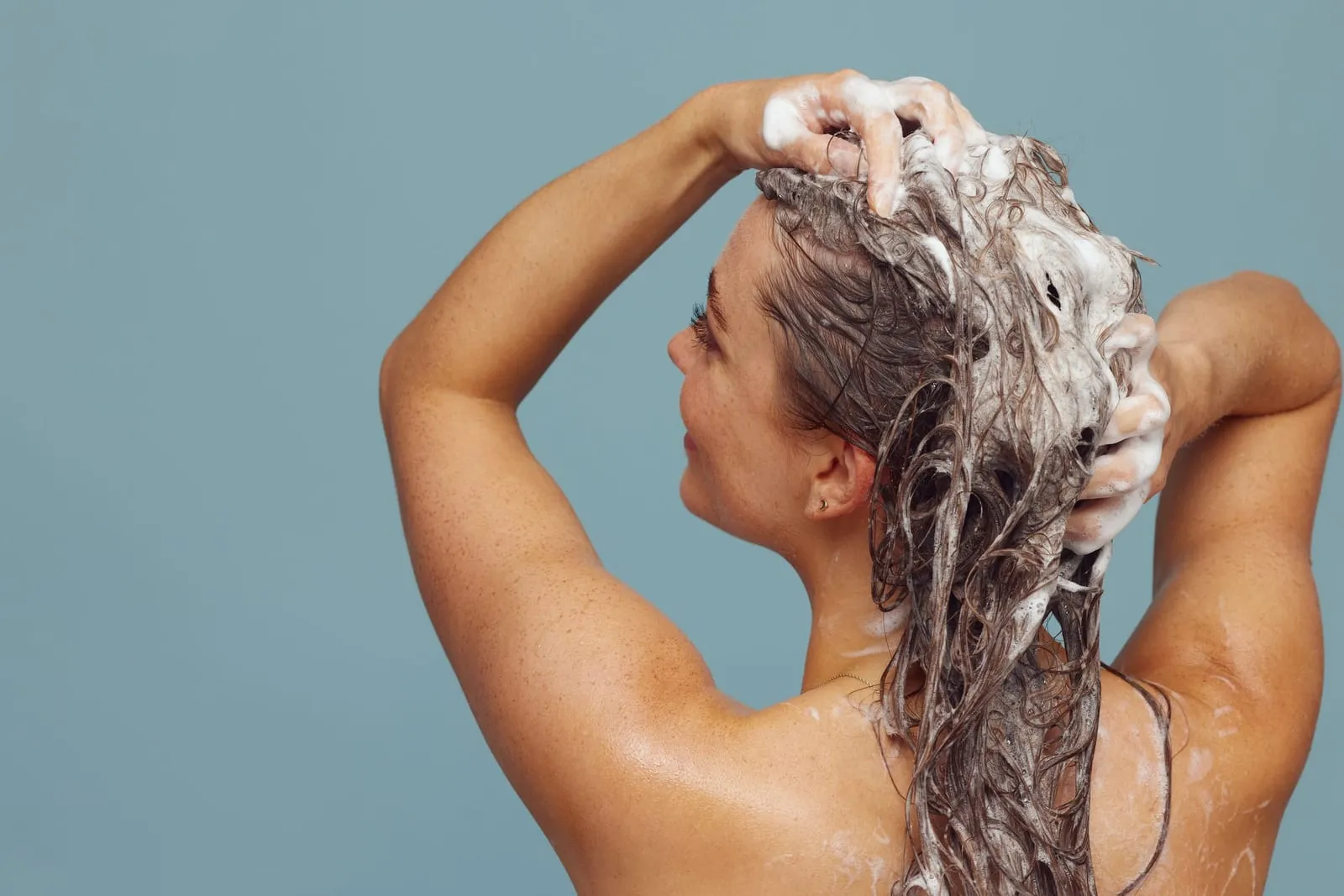
Use a quarter-size amount and massage it into the scalp with your fingertips for about a minute. The suds that run down are enough to clean the lengths, which keeps your ends from drying out. Our guide to washing hair correctly walks through the full routine.
Lather in your palms first
Rub the shampoo between wet palms before it touches your head. It spreads evenly across the scalp instead of landing in one spot, so you clean more with less product.
2. Rinse for a Full Minute
Leftover shampoo and conditioner leave a film that makes hair look limp and slick within hours. Rinse longer than feels necessary, especially at the nape and behind the ears, where product likes to hide.
3. Keep Conditioner Off the Roots
Your scalp already makes its own conditioning oil. Start conditioner at ear level and work down to the ends, then rinse thoroughly.
4. Clarify Every Couple of Weeks
Hairspray, mousse, dry shampoo and serums build up into a film that holds oil against your hair. A clarifying shampoo about every two weeks clears it. Skip it if your scalp feels tight, and follow with conditioner on the ends.
After the Shower: 3 Ways to Dry and Style
How you dry your hair decides how flat it looks at noon.
5. Dry the Roots First
Aim the dryer at your roots while hair is still damp, lifting sections with your fingers or a round brush. Finish with 20 seconds of cool air. Lifted roots do not lie flat against the scalp, so oil is less visible. Fine hair holds lift better with a light volumizer, and our fine hair volume tricks show which kind.
6. Keep Oils and Creams Off the Roots
Serums, oils and leave-in creams belong from the mid-lengths down. A pea-size amount is plenty for straight hair, and our guide to hair oils by hair type shows what suits fine and normal strands.
Did you know?
Hair grows about half an inch a month, according to the American Academy of Dermatology. At that pace, the ends of shoulder-length hair can be around two years old. That is one reason roots can be oily while ends feel dry on the same head.
7. Brush Less, and Keep Your Brush Clean
Every pass of a brush carries oil from the roots down the lengths. That helps dry ends, but on oily hair it spreads the problem. Detangle before you wash, brush only when you need to, and clean your brush every week or two, because old oil and product get redistributed onto clean hair. The brush tip in scalp care 101 shows how.
During the Day: 3 Ways to Hide and Delay Oil
On day two the goal changes. You are slowing oil down and keeping it out of sight.

8. Keep Your Hands Out
Fingers carry oil from your skin and products into your hair. Tucking hair behind your ears, twirling it and pushing bangs aside all count. Watch for the habit for one day and you will be surprised how often it happens.
9. Flip Your Part
Moving your part to the other side puts fresher, more lifted roots on show and hides the flattest spot. Do it on dry hair with a comb, and switch sides again the next morning.
Blot your roots at noon
Press an oil-blotting sheet (the kind sold for faces) or a clean tissue against your roots for 5 seconds, then lift. It picks up surface oil without wetting your hair, and it works well along the hairline and crown.
10. Wear It Up on Day Two
A loose braid, low bun or headband sweeps oily roots out of view. Use a soft, snag-free tie and keep the tension light.
At Night: 2 Ways to Sleep on Less Oil
You can head off tomorrow’s oil before you fall asleep.
11. Use Dry Shampoo at Bedtime
A light mist at the roots before bed lets the powder absorb oil while you sleep. Our guide on how to use dry shampoo covers the technique, the common mistakes and how to choose a formula.
12. Sleep on a Clean Pillowcase
Oil, sweat and product rub onto your pillowcase and back onto your hair. Swap it every few days, or twice a week if your hair is very oily. A silk pillowcase also tends to be gentler on hair, but any clean case helps.
Use a T-shirt as a spare
Short on pillowcases? Lay a clean, soft T-shirt over your pillow for night two and toss it in the wash in the morning. It gives your hair a fresh surface without a laundry pile.
Can You Train Oily Hair? A Myth vs. Fact Check
You will often hear that if you stop washing for a few weeks, your scalp will adjust and make less oil. It is an appealing idea, but we could not point you to solid research that shows it works. Here is what holds up.
| Myth | Fact |
|---|---|
| Skipping washes trains your scalp to make less oil | No solid evidence. Oil output depends mostly on hormones, genetics and age. Better habits can stretch your days, but your scalp is not being retrained. |
| Washing daily makes your scalp produce more oil | Also unproven. Shampoo removes oil, and your scalp makes more on its own schedule. A gentle daily wash is fine if your scalp is comfortable. |
| Conditioner makes hair greasy | Only when it sits on the roots. From the mid-lengths down, it is fine. |
| Hot water makes the scalp oilier | Not shown. Very hot water can irritate skin, though, so lukewarm is the safer choice. |
| Oily hair means dirty hair | No. Sebum is a normal part of healthy skin. It just shows faster on straight hair. |
So where does the “training” story come from? Part of it is probably adjustment. After a few weeks of stretching washes, you get used to day-two hair and pick up tricks like the ones above. That is a routine that improves, not a scalp that reprograms.
A Sample Stretch Plan
Use this as a starting point and adjust it to how your scalp feels.
| When | What to do |
|---|---|
| Wash day | Shampoo the scalp, rinse for a full minute, condition from ear level down, dry the roots first |
| That night | Light dry shampoo at the roots and a clean pillowcase |
| Day 2 morning | Flip your part, keep your hands out, wear it up if needed |
| Day 2 midday | Blot the roots with a tissue or blotting sheet |
| Day 3 | Wash, or stretch one more day if your scalp feels comfortable |
Stretching is a goal, not a rule
If your scalp itches, feels coated or smells, wash it. A comfortable scalp matters more than an extra day.
Troubleshooting: If Your Hair Still Gets Oily Fast
It’s Oily Within Hours of Washing
Check for conditioner or oil on the roots, and rinse longer. If the change was sudden, mention it to your doctor or a dermatologist, because hormones and medications can play a role.
Your Roots Are Oily but Your Ends Are Dry
Keep conditioner to the ends and add a drop of oil there only. Dry, split ends also respond to a trim, and our trimming schedule shows how often.
Your Hair Goes Flat by Noon
Dry the roots first, use a light volumizer and flip your part. Our fine hair volume tricks cover more.
Your Scalp Itches, Flakes or Looks Red
Oil alone does not explain those symptoms. Our scalp care guide covers the basics.
See a dermatologist if it doesn’t improve
Persistent itching, flaking, red patches, hair loss or sudden changes need a professional look. Find general guidance on the American Academy of Dermatology hair and scalp care pages.
Your Next Step
Pick two tips from the list tonight. Rinsing longer and keeping conditioner off your roots are the easiest places to start. Then read how to use dry shampoo the right way to make day two look even better.
Frequently Asked Questions
How often should I wash oily hair?
Can you train your hair to be less oily?
Why does my hair get greasy so fast after washing?
Does dry shampoo help oily hair?
You might also like
More in Hair Care →
How to Use Dry Shampoo the Right Way (Most People Get It Wrong)
Learn how to use dry shampoo so it soaks up oil without white residue, stiffness or buildup. Get the 6-step method, 7 common mistakes and how to pick one.

How to Do a Salon-Style Blowout at Home (and Make It Last)
Learn how to do a blowout at home with simple prep, sectioning and round-brush technique, plus tricks that keep it smooth for days. Try it this weekend!
Which Hair Brush Should You Use? A Simple Guide by Hair Type
Not sure which hair brush to buy? See which type fits your hair, from paddle to boar bristle, and how to brush without breakage. Pick yours today!