How Often to Trim Hair: A Simple Schedule by Hair Type
Not sure how often to trim hair? Get a simple schedule by hair type and goal, plus signs you need a trim now and tips to stretch time between cuts.

In this article
- How Often to Trim Hair: A Quick Schedule
- Why Trims Matter (Even When You Want Length)
- 6 Signs You Need a Trim Now
- Trim vs. Cut: What to Ask For
- What Happens If You Never Trim?
- How Long Does It Take to Grow Out a Trim?
- Trim Timing for Special Situations
- How to Stretch the Time Between Trims
- Troubleshooting: If Trims Are Not Helping
- Your Next Step
You want longer hair, but your stylist says you need a trim, and that feels backwards. The good news is that how often to trim hair depends on your hair type, your style and how you treat your ends, and the answer is rarely “never.” Use the schedule below to find your range, spot the signs you are overdue and keep your length while you do it.
Key takeaways
- Most people do well with a trim every 8 to 12 weeks, and every 6 to 8 weeks for short or precision cuts.
- Trimming does not make hair grow faster, but it keeps split ends from running up the strand.
- Heat, color and dry curls can mean more frequent trims.
- A “dusting” of a quarter to half an inch removes damage without losing much length.
- Your ends tell you what you need, so check them often.
How Often to Trim Hair: A Quick Schedule
Use this table as a starting point, then adjust to your hair.
| Your hair or goal | Suggested trim schedule |
|---|---|
| Short cut or bob (needs shape) | Every 4 to 8 weeks |
| Medium-length styled cut | Every 8 to 10 weeks |
| Growing out long hair | Every 10 to 12 weeks |
| Healthy, low-heat, long hair | Every 12 to 16 weeks |
| Heavily colored, bleached or heat-styled hair | Every 6 to 10 weeks |
| Curly or coily hair | Every 8 to 12 weeks, or as the ends need |
These are guidelines
There is no one number for everyone. Your stylist can look at your ends and tell you what fits.
Why Trims Matter (Even When You Want Length)
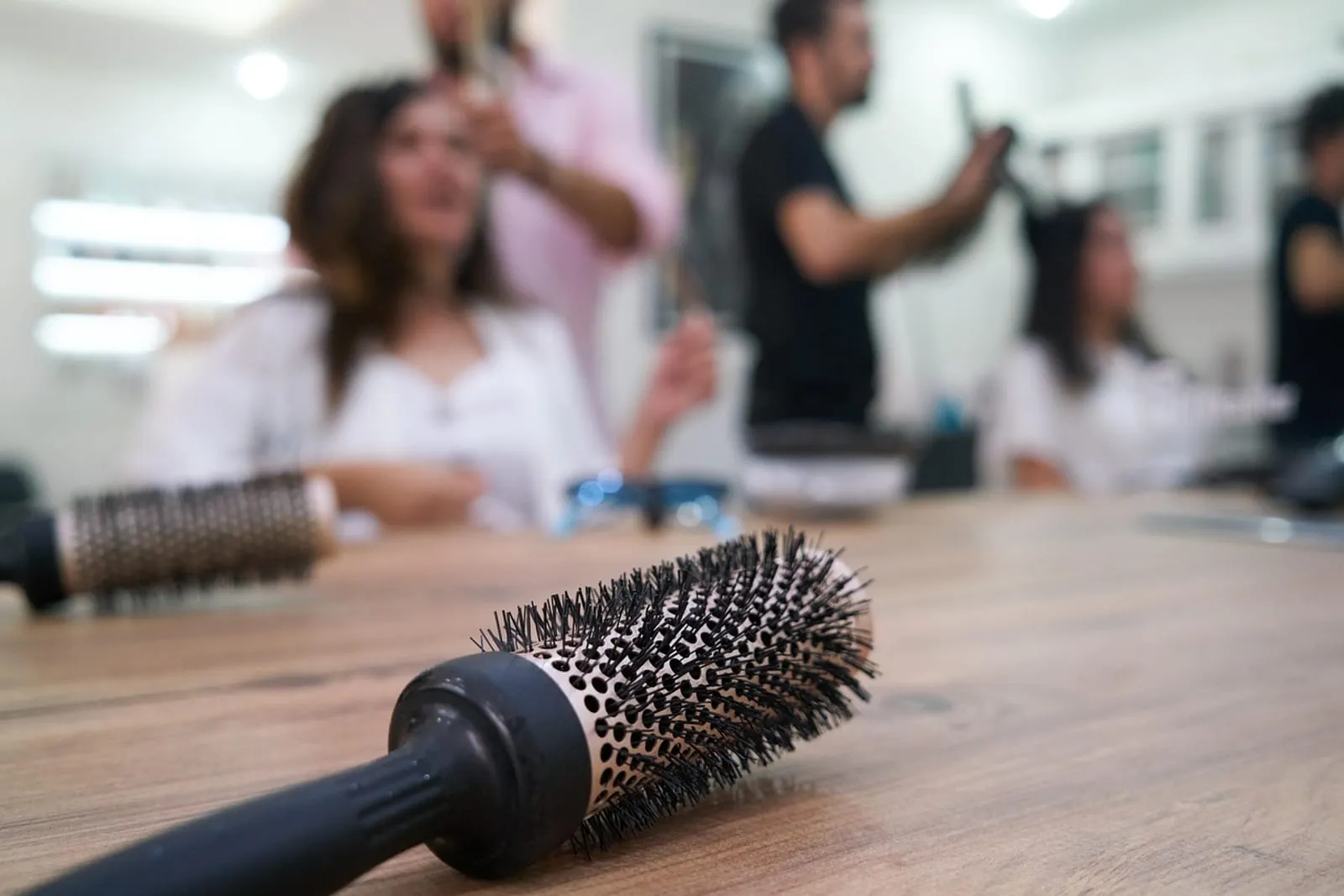
Hair grows about half an inch per month, so a quarter-inch trim every couple of months costs you almost nothing. Without it, tiny splits can keep splitting upward, and the stray pieces tangle and snap. The result is that your hair looks thin at the ends, even though it is growing. For more on this, see hair growth myths, debunked.
Did you know?
Hair grows from the follicle under your skin, so the ends of your hair are the oldest part. A strand that reaches your waist can be several years old at the tip, which is why the ends take the most wear.
6 Signs You Need a Trim Now
Skip the calendar and check for these signs. Two or more mean it is time.
- Split ends. You can see a strand splitting into two or three parts at the tip.
- Tangles and snags. Hair knots up more than it used to.
- Dry, straw-like ends. The bottom few inches feel rough even after conditioning.
- Hair looks thin at the bottom. The ends look see-through instead of full.
- Your style will not hold. Curls, waves or layers fall flat.
- White dots on the strand. These can signal a weak spot that might split.
Quick hack: The twist test
Take a small section of hair, twist it tight and slide your fingers slowly down from the root. Any little fuzzy bits that stick out are broken or split strands, so you can see in seconds how many ends are giving up.
Trim vs. Cut: What to Ask For

Words matter at the salon. Here is how to say what you want.
| What you say | What it means |
|---|---|
| “Just a dusting” | Remove 1/4 inch or less to clean the ends |
| “A trim” | Remove about 1/2 inch to 1 inch |
| “Take off the damage only” | Cut up to where the hair looks healthy |
| “Keep my length and shape” | Maintain layers or the shape of the cut |
If you have curls, ask about a dry cut, which lets the stylist see your curl pattern as it falls. Our curly hair mistakes guide covers more of what to avoid.
What Happens If You Never Trim?
Skipping trims for a long stretch does not stop hair from growing, but it lets small problems pile up. A tiny split at the tip can keep unzipping a little further each time you brush, wash or style. Eventually the break happens higher on the strand, and you lose more length than a quick trim would have cost.
Say you are growing your hair from shoulder length to mid-back. Skipping trims for a year might leave you with ends that look thin and wispy, even though the length is technically there. A quarter-inch dusting every three months would have kept the ends full, and the hair would look longer and healthier.
The best-known guidance on everyday hair habits comes from the American Academy of Dermatology, which also reminds readers that hair changes with age, so your trim schedule may shift over the years.
How Long Does It Take to Grow Out a Trim?
Because hair grows about half an inch per month, a quarter-inch dusting is replaced in around two weeks, and a one-inch trim is back in about two months. That is why regular small trims feel painless, while a big chop after a year of neglect takes much longer to recover from.
Trim Timing for Special Situations
A few life moments change the usual rhythm. Keep these in mind when you plan your next appointment.
- After bleaching or a big color change. Fresh damage often shows up two to four weeks later, so book a trim after the dust settles.
- Before a big event. Trim a week or two ahead, so the ends look clean and any fresh cut has time to settle.
- Before a long haul of heat styling. If you are about to wear hair straight or curled every day, a trim first gives the heat a healthier canvas.
- When you are growing out bangs or layers. Keep the shape tidy with small, frequent visits instead of one big cut.
- After a season of sun, chlorine or salt water. These dry out the ends, so a dusting at the end of summer works well.
Ask your stylist what pace suits your cut and your budget, and write down the date of each trim so you can see the pattern for yourself.
How to Stretch the Time Between Trims
Good habits can let your ends stay healthy longer, so you can go longer between cuts.
- Go easy on heat. Use a heat protectant and the lowest setting that works.
- Handle wet hair gently. Detangle with a wide-tooth comb from the ends up.
- Condition regularly. A weekly mask makes ends flexible. Our deep conditioning guide has recipes.
- Protect at night. A satin pillowcase or loose braid cuts friction.
- Keep ties gentle. Use snag-free elastics.
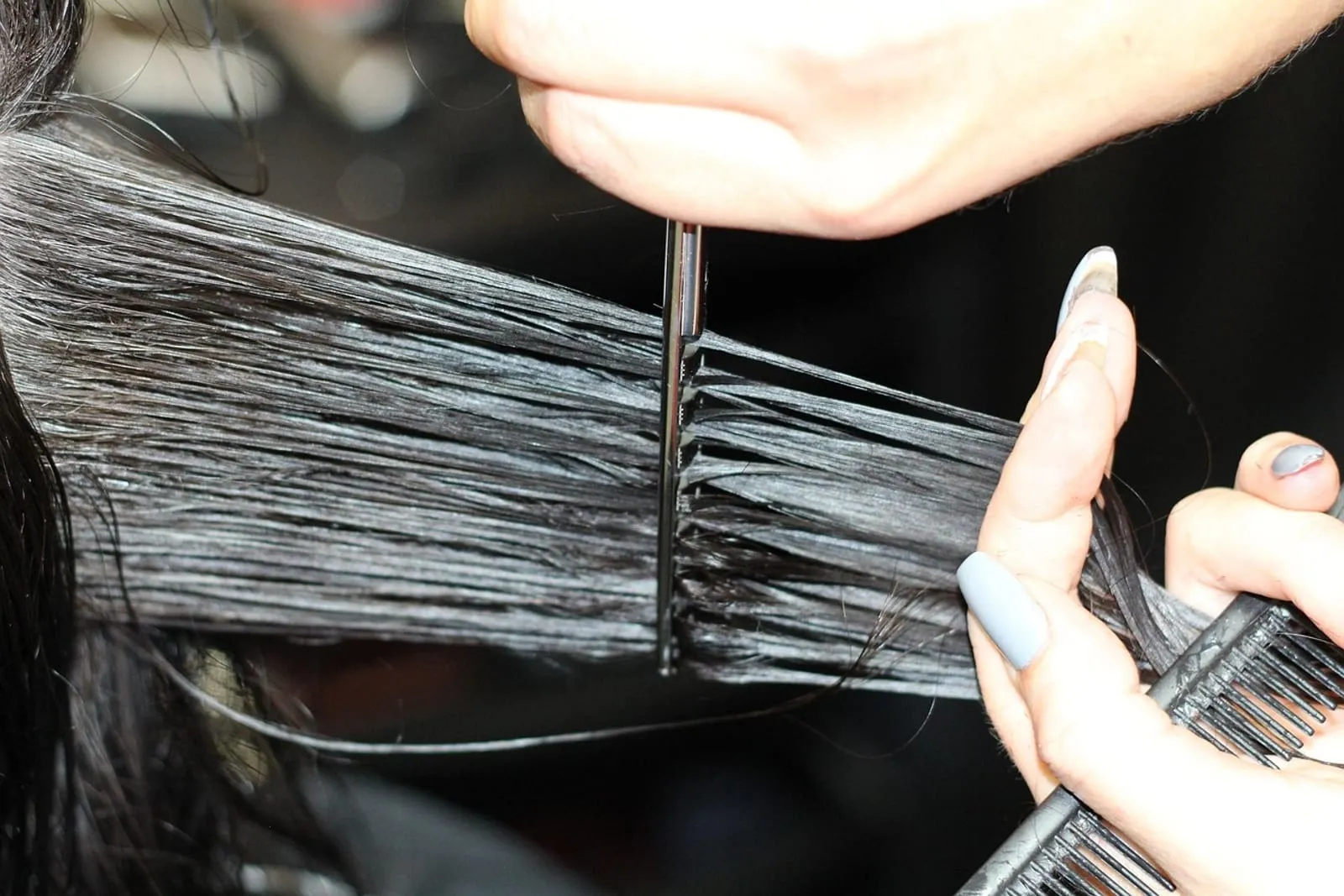
Quick hack: Search-and-destroy trim
If you are growing out and hate losing length, some people snip only the visible split ends one by one with sharp hair scissors. It takes time and cannot replace a proper cut, and you should never use kitchen scissors, but it can buy you extra weeks.
Troubleshooting: If Trims Are Not Helping
Your Ends Split Again in a Few Weeks
That points to what is happening between trims, such as heat, rough towel drying or friction. Review our guide on how to stop hair breakage for fixes.
Your Hair Looks Shorter After Every Trim
Ask for smaller trims and tell your stylist exactly how much you want gone. Measure beforehand, so you both agree on the amount.
You Cannot Afford Frequent Salon Visits
Stretch your time with the habits above, and ask your stylist for a quick “dusting” only. Some salons offer cheaper trim-only appointments.
You Are Nervous About a DIY Trim
Use real hair-cutting shears, not craft or kitchen scissors, and cut dry, straight hair a little at a time. If in doubt, leave it to a stylist.
Your Next Step
Check your ends tonight in good light. If you see splits or snags, book a dusting within the next few weeks, and pick one habit from this list to start. To keep your ends from breaking in the first place, read our guide on how to stop hair breakage.
Frequently Asked Questions
How often should I trim my hair to grow it out?
Can I go a year without a trim?
How much hair should I have trimmed off?
Do curly or textured styles need trims as often?
You might also like
More in Hair Care →
Fine Hair Volume: 10 Tricks That Really Work
Get fine hair volume that lasts with 10 simple tricks, from wash routine and cut to blow-dry tricks and product swaps. See which ones fit you. Try one today!
How to Stop Hair Breakage: 9 Fixes That Actually Work
Learn how to stop hair breakage with 9 simple fixes for brushing, heat, towels, sleep and conditioning. Spot the causes, then keep your length. Start today!

12 Hair Growth Myths, Debunked (What Actually Works)
Does trimming make hair grow faster? Do 100 brush strokes help? Debunk 12 common hair growth myths and learn what really helps. Find out the facts!