How to Declutter Your Home in 7 Days: A Room-by-Room Plan
Declutter your home in 7 days with a room-by-room plan: simple keep, give away and let go rules, 30-minute tasks and where to donate. Start with Day 1.

In this article
The counters are buried, the hall closet won’t shut, and the thought of sorting the whole house at once makes you want to sit down. Here is a calmer way. You can declutter your home in 7 days by taking one zone a day, 30 to 60 minutes each, with simple rules for what stays and a clear plan for where the rest goes.
Key takeaways
- One zone a day beats one exhausting weekend. Small wins keep you going.
- Sort into three piles only: keep, give away and let go.
- Start with the easy zones (entryway, kitchen) and finish with paper and digital clutter.
- Take the donation bags out of the house on Day 7 so nothing creeps back in.
- End with a 10-minute daily reset so the clutter stays away.
How to Declutter Your Home in 7 Days: The Plan
Each day has one zone, one goal and a time limit. Do them in order. The early days are quick wins, and by the time you reach the harder zones you will have practiced making fast decisions.
| Day | Zone | Goal | Time |
|---|---|---|---|
| 1 | Entryway | Clear shoes, coats, bags and the mail pile | 30 min |
| 2 | Kitchen | Counters, one drawer, pantry and fridge | 45-60 min |
| 3 | Living room | Clear every flat surface, cords and shelves | 45 min |
| 4 | Bedroom | Nightstands, dresser top and under the bed | 45-60 min |
| 5 | Bathroom | Cabinet, drawers and shower shelf | 30-45 min |
| 6 | Paper and digital | Mail, files, phone and inbox | 45-60 min |
| 7 | Finish line | Donation run, quick clean and daily reset plan | 60 min |
Before Day 1, grab three bags or boxes labeled Give Away, Let Go (trash and recycling) and Elsewhere (things that belong in another room). Add a marker and a phone timer. The Elsewhere bag matters: it stops you from wandering off to put a book on a shelf and forgetting what you were doing.
The Three Piles: Keep, Give Away, Let Go
Pick up each item once and decide in about ten seconds. If you start debating, the table below makes the call for you. This plan works by room, not by category, which keeps each day short and easy to finish.

| If this is true… | Then… |
|---|---|
| You used it in the past year, or you use it every season | Keep |
| It works, but you haven’t touched it in a year | Give away |
| You own three of it and use one | Keep your favorite, give away the rest |
| It’s broken, stained, expired or missing pieces | Let go |
| It’s a gift you don’t like or use | Give away. Its job ended when you opened it |
| It’s sentimental | Photograph it, then keep a single memory box |
Did you know?
In a 2011 brain-imaging study at the Princeton Neuroscience Institute, researchers found that objects in your field of view compete for your brain’s attention, which limits how well it can process any one of them. Fewer things in sight means less competition for your focus.
Not sure about an item? Use one “maybe” box per day. Write the date on it, tape it shut and put it in a closet. If you haven’t opened it in 30 days, donate it without looking inside.
Quick hack: take a “before” photo
Snap a picture of each zone before you start. You stop noticing clutter you walk past every day, but a photo shows it the way a guest sees it. The photo also gives you a satisfying before-and-after when you finish.
Days 1-2: Entryway and Kitchen
Day 1: The Entryway (30 minutes)
Everything that comes in the door lands here, so it fills up fast. Take every shoe, coat, bag and umbrella out and lay them on the floor.
- Keep what your household wears this season and move off-season coats to a closet or bin.
- Recycle junk mail on the spot and sort the rest into one tray: bills, action, keep.
- Check bags and coat pockets for old receipts, loose change and expired coupons.
- Give each person one hook and one shoe spot. When the spot is full, something goes.
Quick hack: the exit bag
Put an open bag labeled “Give Away” next to the front door on Day 1 and leave it there all week. Anything you spot during the next six days goes straight in. On Day 7 it’s already full and ready to leave.
Day 2: The Kitchen (45-60 minutes)
Work in this order: counters, one drawer, then pantry and fridge. Clear the counters completely, wipe them and put back only what you use daily. Every appliance you leave out should earn its spot by being used at least a few times a week.
Next, tackle the junk drawer. Dump it on the table, toss dead batteries and dried-out pens, and give every leftover item a home. Then check the pantry and the fridge shelf by shelf.
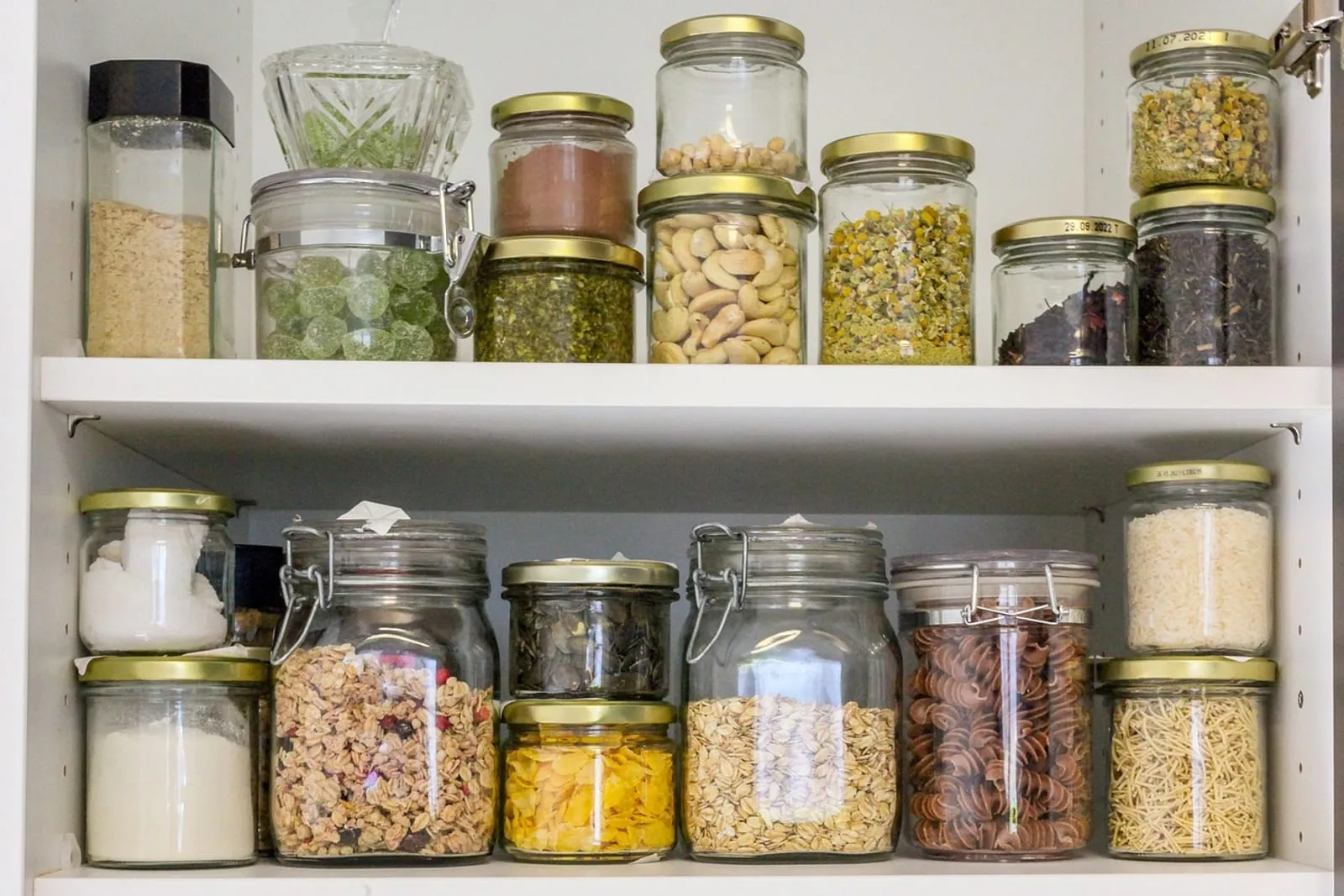
Toss anything moldy, spoiled or clearly past its prime, and set aside unopened, unexpired non-perishables for a local food pantry. Call first, since pantries differ in what they accept. Before you empty the shelf into the trash, though, check what those dates really mean.
Did you know?
A “best by” date usually describes peak quality, not safety. According to USDA’s Food Safety and Inspection Service, with the exception of infant formula, product dating is not required by federal law. Use your eyes and nose, and don’t throw out food just because the date has passed.
For gadgets you rarely use (the waffle maker, the third spatula), try the box test. Pack them in a box, tape it and date it. If you haven’t needed anything inside in 60 days, give it away.
Days 3-4: Living Room and Bedroom
Day 3: The Living Room (45 minutes)
Start with flat surfaces: coffee table, TV stand, shelves and side tables. Clear them completely, wipe them down and return only what you use or love. Then sweep through these usual suspects:
- Old magazines, takeout menus and catalogs go to recycling.
- Cords and chargers: keep the ones that match devices you own and label them with painter’s tape.
- Remotes, games and DVDs with missing pieces go in the Let Go bag.
- Books you won’t reread can go to a library donation shelf or a Little Free Library.
A small basket for blankets and a single tray for remotes give the room a “home base” for the things that tend to drift.
Day 4: The Bedroom (45-60 minutes)
The bedroom is the room you see last at night and first in the morning, so it sets the tone for the day. Start at the nightstands. Keep a lamp, your book and a charger; relocate the rest. Do the dresser top next, then look under the bed.

Under the bed, pull out everything and sort it with the same three piles. Only things you use should go back. If the closet is the bigger problem, give it its own weekend with our guide to decluttering a small closet. A neat bedroom also makes the last hour of your day easier, which pairs well with these evening routine ideas.
Days 5-6: Bathroom, Paper and Digital
Day 5: The Bathroom (30-45 minutes)
Empty the cabinet and drawers onto the counter. Toss anything expired, leaking or unused for a year. Mascara and liquid eyeliner have the shortest lives, so plan to replace mascara about every three months.
Did you know?
Don’t toss old medicine in the trash without a plan. The FDA says the best option is a drug take-back program, and the DEA runs a National Prescription Drug Take Back Day twice a year, in April and October. Many pharmacies also have year-round drop boxes. See the FDA’s disposal guide for what to do if no program is nearby.
With the shelves empty, wipe everything down. Our 20-minute bathroom cleaning routine shows the order that makes it quick.
Day 6: Paper and Digital Clutter (45-60 minutes)
Paper first. Sort the pile into four stacks: act on, keep, shred and recycle. The IRS generally suggests keeping records that support your tax return for at least three years, and longer in some cases. Check the IRS record-keeping guide for the details. Keep birth certificates, passports and home or vehicle titles in one safe folder. Shred anything with account numbers or personal data.

Then spend 20 minutes on your phone and inbox. Delete screenshots you’ve already used, clear duplicate photos and remove apps you haven’t opened in months. If your storage is full, free up iPhone storage with a few quick steps.
Quick hack: find newsletters fast
Search your inbox for the word “unsubscribe.” Every promotional email you’ve received shows up in one list, so you can unsubscribe from a handful in minutes instead of deleting them one at a time.
Day 7: Finish Line, Donation Run and Reset
Today you finish the job. Do a quick pass through the Elsewhere bag, put things where they belong and take out the trash and recycling. Then load the Give Away bags into your car and drop them off today. Bags that stay in the house have a way of being unpacked.
Here is where common items can go:
| What | Where it can go | Tip |
|---|---|---|
| Clothes, shoes, household goods | Thrift stores such as Goodwill or the Salvation Army | Ask for a donation receipt |
| Furniture and building materials | Many Habitat for Humanity ReStores | Call first about what they take |
| Books | Public libraries, Little Free Libraries | Check for a donation shelf |
| Unopened, unexpired food | Local food pantries | Call ahead for hours |
| Working electronics and cords | Retailer or city e-waste drop-offs | Wipe your data first |
| Paint, batteries, chemicals | Household hazardous waste collection | Never put these in the regular trash |
| Anything in good shape | Local “Buy Nothing” groups | Meet in a public place |
Keep your receipts
If you itemize your tax deductions, clothing and household items must be in good used condition or better to be deductible, according to the IRS. A receipt helps you keep a record of what you gave.
Last, set up the reset. Spend ten minutes each evening putting things back where they live. Try a one-in, one-out rule for new purchases. A weekly reset fits well into a self-care Sunday routine, and a clear surface makes your morning routine go smoother.
If You Start to Stall
Most people hit a wall around Day 3 or 4. That’s normal. Match the problem to the fix.
| Problem | Fix |
|---|---|
| You’re out of energy | Cut the timer to 15 minutes and clear only flat surfaces. Skip a day if you must, but don’t quit |
| Everything feels like a “maybe” | Use the dated maybe box and revisit it in 30 days |
| Other people’s stuff is in your way | Box it, put it in their room and ask them to sort their own pile |
| You feel guilty about money spent | The money is gone whether the item sits in a closet or goes to someone who will use it |
| The clutter keeps coming back | Add one-in, one-out and a 10-minute nightly reset |
| It’s still overwhelming | Start with the trash only. Removing the obvious garbage shows quick progress |
Your Next Step
Right now, put one open bag by your front door and set a 30-minute timer for tomorrow. That is all Day 1 requires. When you reach Day 5, use the 20-minute bathroom routine to wipe down the shelves you just cleared, and keep the momentum going for the rest of the week.
Frequently Asked Questions
Can you really declutter your whole home in a week?
Where should I start when I declutter my house?
How do I decide what to keep when decluttering?
What should I do with things I can't decide on?
You might also like
More in Home & Life →
How to Clean Bathroom Fast: A 20-Minute Routine
Clean bathroom fast with a 20-minute top-to-bottom routine: what to use on each surface, how to beat soap scum and grout mold, and what never to mix.
How to Make Home Smell Good Naturally: 15 Easy Ideas
Want to make home smell good without sprays? Try 15 natural ideas: fix the source, use baking soda, open windows and simmer citrus. Start today!
15 Morning Routine Ideas for a Calmer, More Productive Day
Try these 15 morning routine ideas for a calmer, more productive day: simple habits that take 2 to 15 minutes, plus three sample routines. Find your fit!