How to Wash Hair Correctly: A Step-by-Step Guide
Learn how to wash hair the right way: water temperature, shampoo amount, conditioner placement and drying. Fix greasy roots and dry ends today!
In this article
Greasy roots by day two, dry and tangled ends, and a scalp that never quite feels clean: if that sounds familiar, the problem is rarely your shampoo. It is usually the method. Here is how to wash hair step by step, with the right amount of product, the right water temperature and a drying routine that keeps frizz and breakage down.
Key takeaways
- Shampoo is for the scalp and conditioner is for the lengths and ends. Don’t swap them.
- A quarter-size amount of shampoo is enough for most people; use a little more for very thick or long hair.
- Use lukewarm water and rinse for longer than you think, about a full minute after shampooing.
- Wet hair is fragile, so detangle gently and blot dry instead of rubbing.
- Wash frequency depends on your scalp and texture. There is no single “right” number of days.
Before You Start: Prep That Makes Washing Easier
A few minutes before you step into the shower can prevent most tangles and breakage. Wet hair stretches and snaps more easily than dry hair, so it pays to loosen knots first.
- Brush or finger-detangle dry hair. Start at the ends and work up to the roots with a wide-tooth comb or a paddle brush.
- Pull long hair loosely to one side if it tends to knot while you wash.
- Pick your products before the water runs. Fumbling with bottles in the shower leads to rushed rinsing.
Did you know?
Hair is weakest when it is wet. Water temporarily breaks hydrogen bonds in the strand, which makes it stretch more and snap more easily. That is why gentle handling in the shower matters.
How to Wash Hair: The 7-Step Method
Follow these steps in order. The whole thing takes about 8 to 10 minutes, and most of that is rinsing.
Step 1: Wet Your Hair Thoroughly
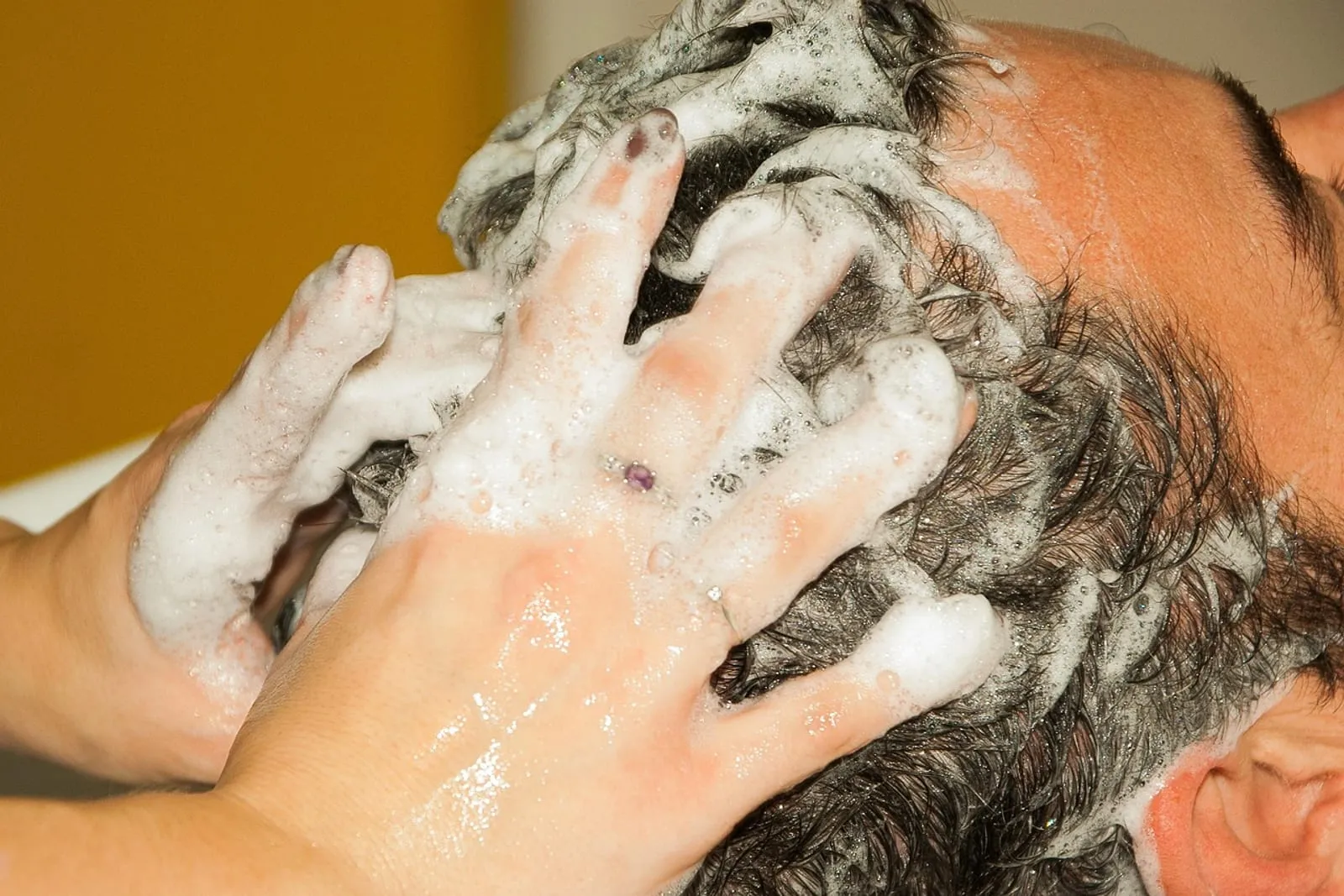
Spend a full 30 to 60 seconds letting lukewarm water soak the scalp and lengths. Dry spots are the main reason shampoo doesn’t spread and people end up using too much.
Step 2: Use a Quarter-Size Amount of Shampoo
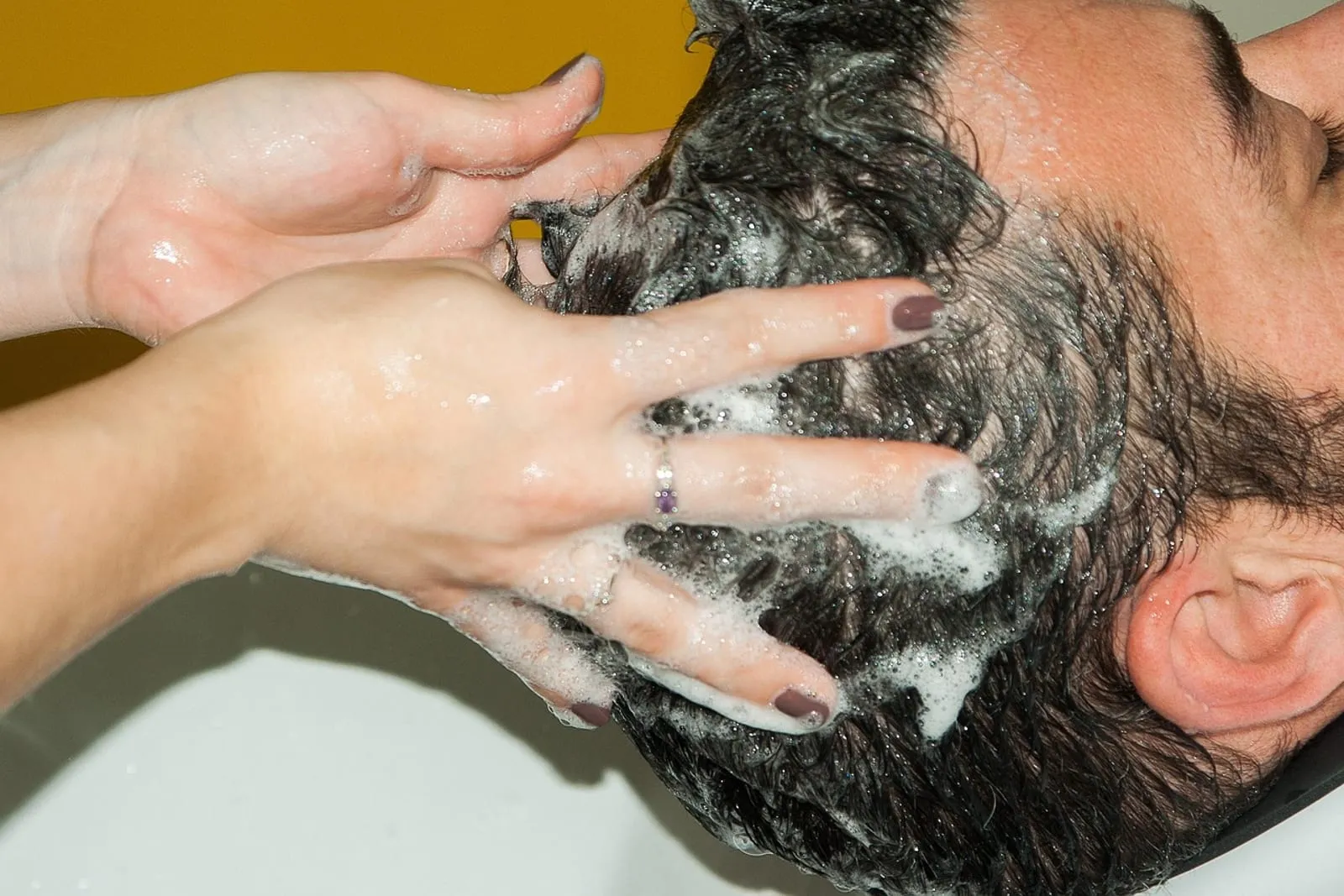
Pour it into your palm, add a splash of water and rub your hands together to loosen it up. Diluting the shampoo helps it spread across the scalp without needing extra product.
Step 3: Massage the Scalp, Not the Lengths
Use the pads of your fingers, not your nails, and make small circles from the hairline to the crown, then down the back. Spend about a minute here. The suds will run down through your hair and clean the lengths without scrubbing them into tangles.
Step 4: Rinse for a Full Minute
Tilt your head back and let the water run through from the roots to the ends. Shampoo or conditioner left on the scalp is a common cause of itch and flakes.
Step 5: Apply Conditioner From Mid-Lengths to Ends
Squeeze out the extra water first, then smooth conditioner over the lower half of your hair. Use a quarter-size amount for shoulder length and more for longer hair. Keep it off the scalp unless the label says it is a scalp product. Not sure how much your hair can take? Our guide to low vs high porosity hair explains why some hair soaks up conditioner and some repels it.
Step 6: Wait, Then Rinse
Leave it on for 2 to 3 minutes while you wash your body. Then rinse until the hair feels smooth but not squeaky.
Step 7: Finish With a Cool Rinse (Optional)
A short blast of cooler water at the end can leave hair feeling smoother. It is a comfort step, not a requirement.
The detangle-in-conditioner trick
While the conditioner is in, comb through your hair with a wide-tooth comb from the ends upward. The slip from the conditioner lets the comb glide, so you pull out fewer strands than you would on dry or shampoo-stripped hair.
How Often Should You Wash Your Hair?
There is no universal schedule. Your scalp produces an oil called sebum, and how fast it builds up depends on your texture, hormones, climate and how often you exercise. Use this table as a starting point and adjust by how your scalp feels.
| Hair type or situation | Starting point | Watch for |
|---|---|---|
| Fine, straight hair | Every 1 to 2 days | Flat, greasy roots by afternoon |
| Thick, wavy hair | Every 2 to 3 days | Oily roots, dry ends |
| Curly hair | Every 5 to 10 days | Itchy or heavy scalp |
| Coily or very textured hair | Every 7 to 14 days | Buildup, dryness and flakes |
| Daily workouts or heavy sweat | Rinse after, shampoo as needed | Sweat smell or itch |
| Lots of styling products | Every 2 to 4 days | Dull, coated-feeling hair |
Did you know?
Your scalp makes sebum, a natural oil that coats every strand. It is why hair gets greasy, but it is also the reason you don’t need to put conditioner on your roots: the scalp already conditions that part of your hair.
If you have curls, our weekly curly hair routine shows where washing fits into a full week. Wash day looks different if you follow the Curly Girl method, which skips harsh cleansers.
The two-day test
Skip a wash and look at your scalp the next morning. If roots are only slightly oily and nothing itches, you can stretch it another day. If your scalp feels coated or itchy, wash.
Choosing the Right Shampoo for Your Scalp
Match the shampoo to your scalp, not just to your hair length.
- Oily scalp: a clarifying or lightweight, balancing shampoo.
- Dry or itchy scalp: a gentle, moisturizing formula without heavy fragrance.
- Flaky scalp: a dandruff shampoo with an active ingredient such as zinc pyrithione, ketoconazole or selenium sulfide. Follow the label.
- Color-treated hair: a shampoo labeled color-safe, washed with lukewarm water.
- Very dry or textured hair: a gentle or moisturizing shampoo, used less often.
Foam is not a quality sign
Lather comes from ingredients called surfactants and says little about how clean or healthy your hair gets. A shampoo that doesn’t foam a lot can still clean well.
Drying and Styling: The Step Most People Rush
Wet hair needs a softer touch than dry hair.
- Squeeze, don’t rub. Press water out of the lengths with your hands, then wrap hair in a microfiber towel or a soft cotton T-shirt. Dermatologists at the American Academy of Dermatology list rough towel drying among habits that damage hair.
- Detangle again, gently, with a wide-tooth comb from the ends upward.
- Air-dry when you can, or use a blow-dryer on a medium heat setting, held several inches from your hair and kept moving.
Blot with a T-shirt
A smooth cotton T-shirt has less rough texture than a terry towel, so it pulls less on the cuticle. Gather your hair in it for 10 minutes before drying or styling.
If you air-dry waves or curls, our guide to how to plop curly hair is a good next step.
Troubleshooting: If Washing Isn’t Working
Your Hair Is Greasy Again by Day Two
Check how long you rinse and how much conditioner touches the scalp. Rinse for a full minute and keep conditioner off the roots. If it still builds up quickly, try a clarifying shampoo once every couple of weeks.
Your Ends Are Dry and Straw-Like
You may be putting shampoo on the ends, using water that is too hot or washing too often. Concentrate shampoo on the scalp and add a deep conditioning treatment. See our guide to deep conditioning curly hair for a simple routine that works on any texture.
Your Scalp Itches After Washing
Leftover product is the usual culprit, so rinse longer. If the itch continues, or you see redness or heavy flakes, check our scalp care guide.
Your Hair Looks Dull
Buildup from styling products and hard water can make hair look flat. A clarifying shampoo every few weeks helps, followed by conditioner on the lengths.
Your Roots Are Flat
You may be using too much conditioner or applying it too high. Keep it below your ears and rinse well. Flip your head over and lift your roots as they dry.
Your Next Step
Tonight, change just one thing: use a quarter-size amount of shampoo on your scalp only, and rinse for a full minute. Then take a look at how your scalp feels the next morning. If it is still itchy, oily or flaky, read our scalp care guide for what to try next.
Frequently Asked Questions
How often should I wash my hair?
Should I shampoo twice?
Do I need to put shampoo on my ends?
Is cold water better than hot water for washing hair?
You might also like
More in Hair Care →
12 Hair Growth Myths, Debunked (What Actually Works)
Does trimming make hair grow faster? Do 100 brush strokes help? Debunk 12 common hair growth myths and learn what really helps. Find out the facts!

Apple Cider Vinegar Hair Rinse: Does It Work?
Does an apple cider vinegar hair rinse really make hair shinier? See the science, the safe ratio, how often to rinse and who should skip it. Try it once!
Best Hair Oils for Every Hair Type (and How to Use Them)
Find the best hair oils for your hair type, from fine and oily to thick and coily. Compare 7 oils, learn how much to use and avoid greasy hair. Start here!